
Introduction
Schneider Electric/Lauritz Knudsen recently introduced a new dimmer, 545 D 6104:
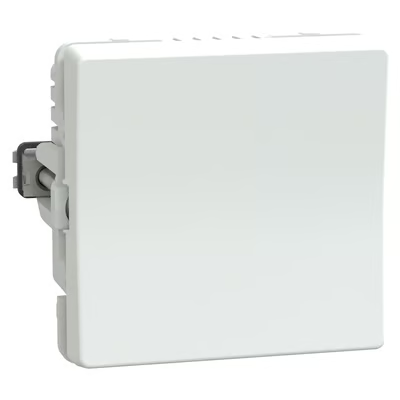
which unfortunately replaces, rather than complements, the 545 D 6102:
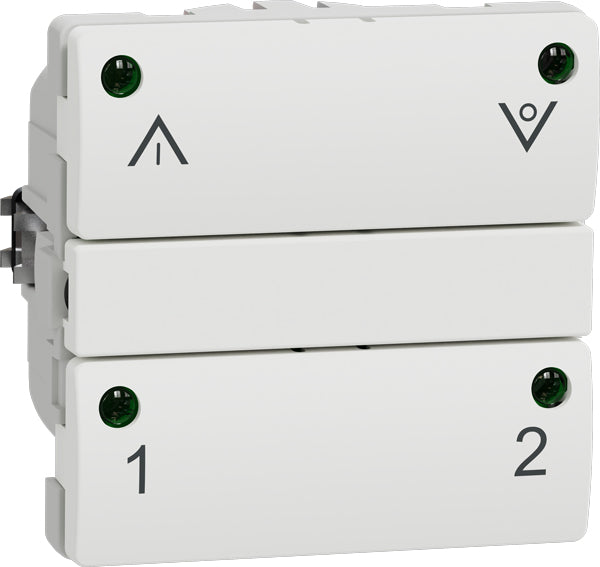
After installing a new lamp, I wanted to add a dimmer for controlling a Philips Master DimTone bulb. I already have quite a few of the IHC-style dimmers/relays, but since the dimmer is already out of stock or insanely expensive, I decided to accept the new reality and give the new dimmer a shot.
I had some reservations, because I already knew that the new dimmer is less advanced than the old one: It has only two buttons, whereas the old one had four. Additionally, the old one one also had four LED’s.
Installation
After receiving it, I was pretty eager to get it installed. Before that, however, I gave it a quick test to pair it and see how compatible it would be with my bulb when paired with Philips Hue (rather than deCONZ), particularly whether I would need to set a minimum dimming level, which is not possible with Hue.
Luckily, the DimTone bulb played along very nicely, with 1% dimming being almost off and no flickering at all. Controlling if from Philips Hue is very much compatible with the old dimmer, i.e., it’s still not possible to turn it off.
I went on to install it between a 545 D 6102 and an electrical outlet. This proved to be very difficult and frustrating, so let’s look at why:
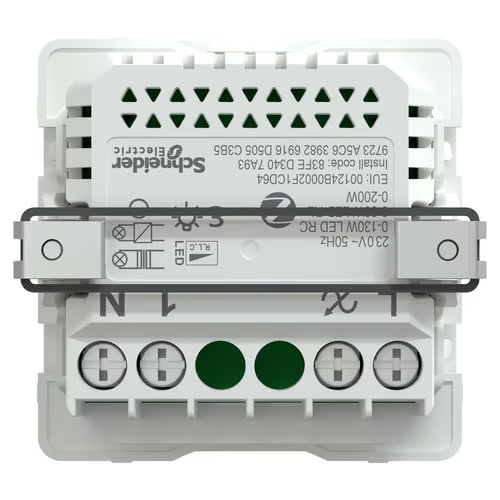
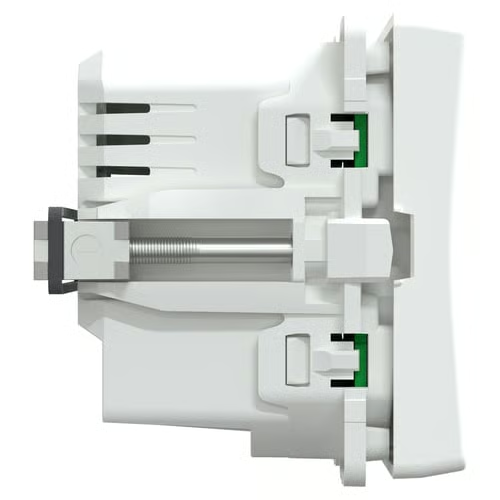
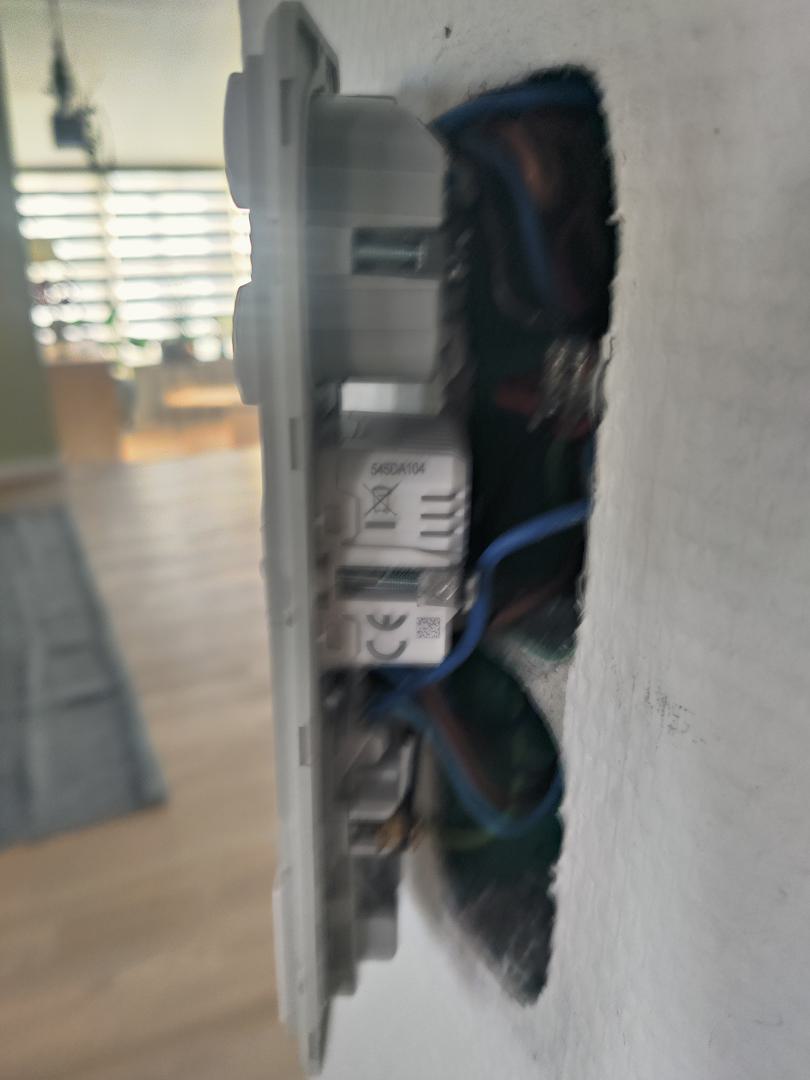
First of all, it’s very big. According to the datasheet, it’s 41 mm deep. I wasn’t able to find directly comparable specifications for the 6102, but it’s clearly not as deep or massive.
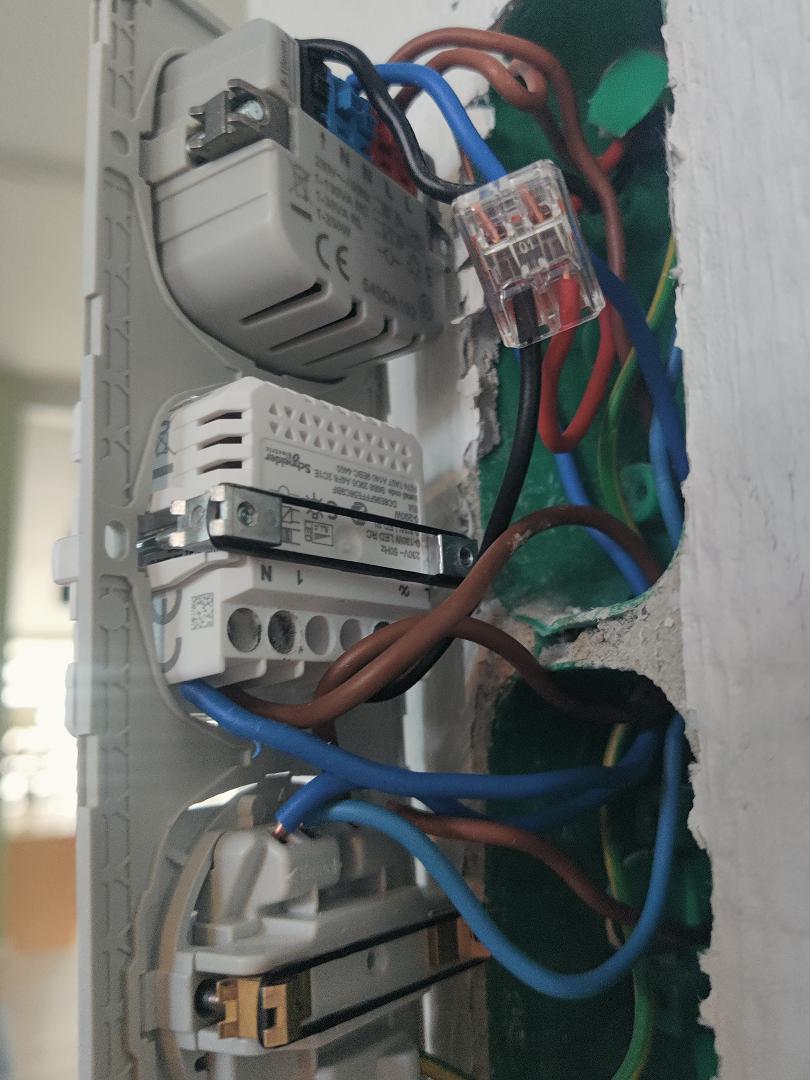
Another problem is the wiring terminals are at the bottom. This is particularly annoying when the wires are coming from the top of the wall box and the dimmer is installed in the bottom position. This combination made it impossible for me to install as bottom module in an old 2.0-module wall box. It simply doesn’t fit, and when trying (hard), I also had to extend one of the wires with a WAGO connector (at the top is the old 6102, and below it the new 6104):
Another major step backward, in my opinion, is the use of screw terminals. They require longer wires than actually necessary in order to position the module where there is enough space for a screwdriver. Also, when loop-through wiring is needed, you have to fit two solid-core wires into the same terminal.
This is much harder to work with than the superior push-in terminals where each wire has its own terminal and where wires can easily be pushed in while all modules are still close to the wall.
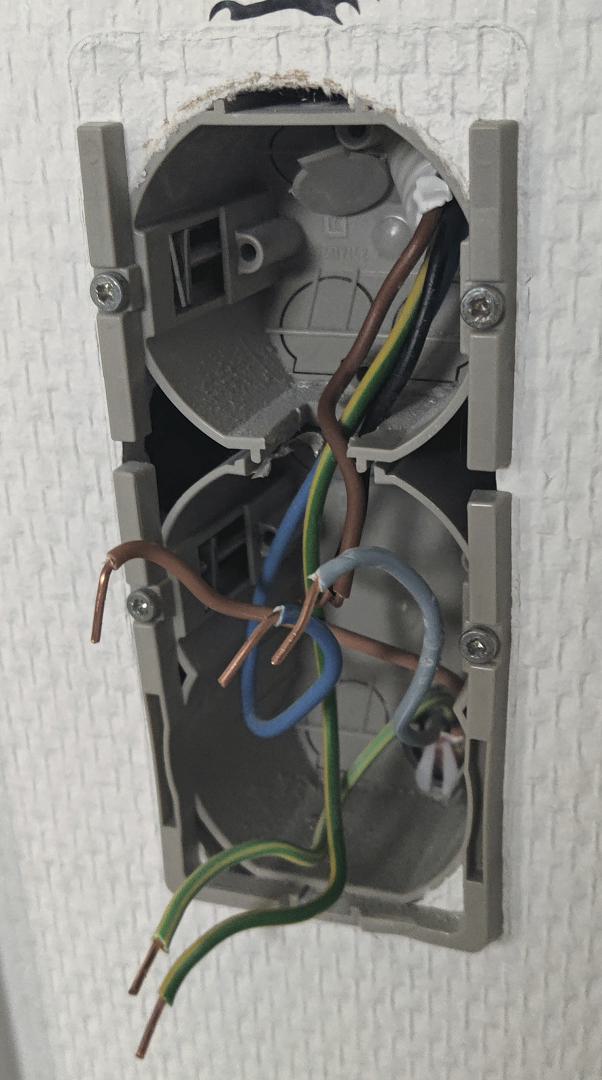
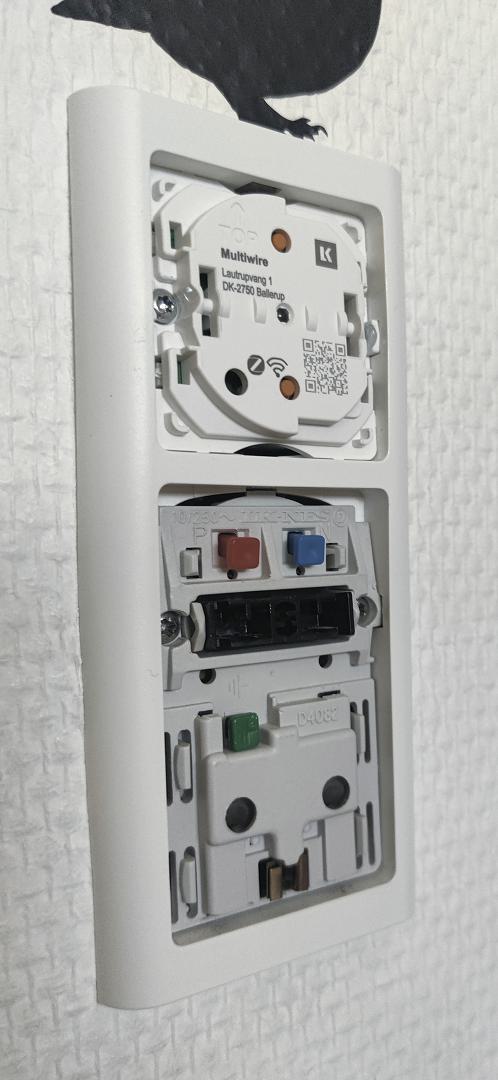
Ultimately, I had to abandon the project in the pictures above and find another purpose for the dimmer. I finally managed to install it in an old 1.0-module drywall box, but it required a lot of rewiring and an extreme amount of pressure to fully get it into position because of its sheer size, especially at the bottom.
And, to be honest, I didn’t actually manage to get it fully into position. I tried, but it was impossible:
Functionality
After finally getting it installed, I gave it a few more tests.
One function I didn’t expect is a red LED right in the middle behind the switch cover. When dimmed, this LED turns on. I noticed it when the room was dark and the dimmer was set to to 1%, leaving barely any light in the room.
It feels a bit awkward having a red LED behind a white switch cover, and its functionality is hardcoded, but nevertheless, it’s there – noticed and now mentioned.
Dimming itself works nicely, but it’s a bit too fast when holding down the switch, making it practially impossible to hit 1% or even 5% manually. That has to be done through software.
And unlike the 6102, it doesn’t have any memory function or physical switches for saving favorite dimming levels.
Power consumption
I measured the power consumption with a Spar-O-Meter over 14 hours and 7 minutes before moving on with the installation. During that period, it consumed 0.003 kWh, which corresponds to a standby power consumption of approximately 0.3 W.
That’s slightly better than the 6102, which consumed 0.009 kWh over 24 hours, i.e. approximately 0.4 W in standby.
Conclusion
Overall, I’m quite disappointed with this product. I don’t think it lives up to LK’s own high historical standards.
It’s “cheap” (~ 500 kr.) compared to the older 6102, but it certainly also feels cheap.